The Importance of Golf Balance Exercises
The Importance of Golf Balance Exercises
Golf balance exercises should be a must for every amateur golfer. One of the biggest issues with most amateurs is balance, stability, and body control in their golf swing. The importance of golf balance exercises can’t be understated.
So often I see a golfer swinging outside their physical capabilities and losing their balance, resulting in a severe mishit that will end up being a double or triple bogey.
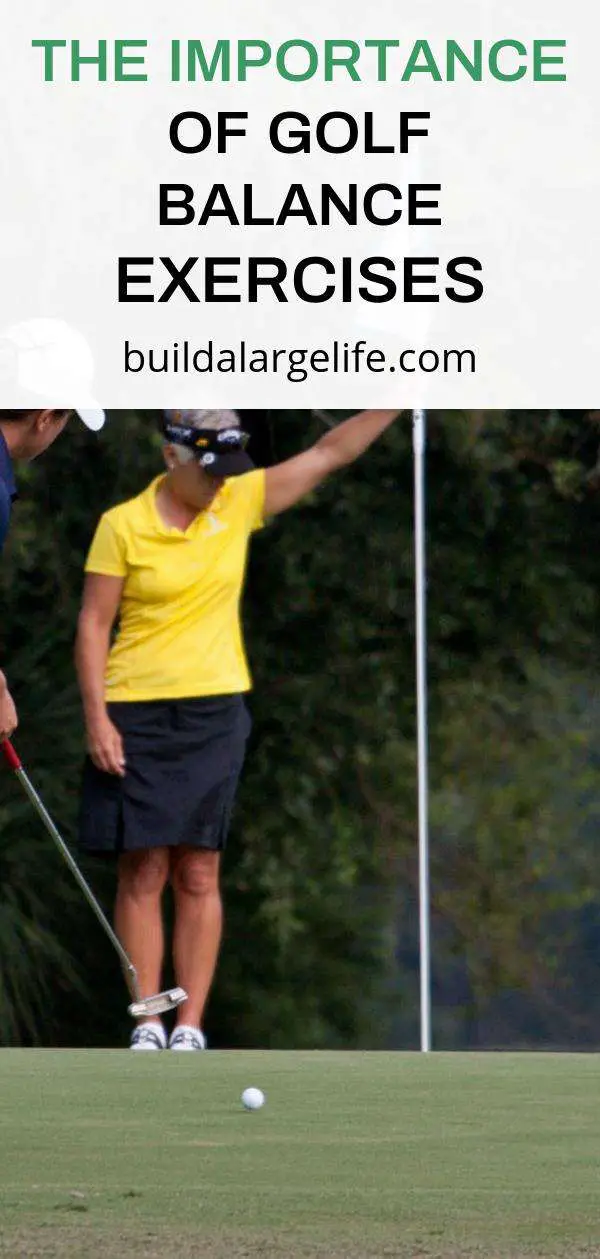
There is a physical requirement to maintaining your golf balance throughout your swing. The golf swing position commonly referred to as golf posture is a very unnatural position for the body to be in at address, let alone throughout the swing.
Having a forward tilt over the balls of your feet requires a high level of both strength and flexibility in your hamstrings. Just get in your golf posture and reach back behind your upper leg to see how tight your hamstrings are.
If your hamstrings are tight and/or weak, you will have no chance at maintaining your golf posture and ultimately balance throughout your golf swing.
Understanding the Muscles Involved in Golf Balance
The physical demands of the golf swing go beyond just swinging the club. Key muscle groups play a crucial role in maintaining stability and control from the initial stance to the follow-through.
Hamstring Strength and Flexibility
Your golf posture, with its forward tilt and flexed knees, places a significant demand on your hamstrings. This posterior chain of muscles must possess both adequate strength to support the posture and flexibility to allow for the dynamic movements of the swing. Tight hamstrings can pull on the pelvis, altering your swing mechanics and compromising balance. Regularly incorporating hamstring stretches and strengthening exercises can directly improve your ability to hold that critical golf posture.
Quadriceps Power for Stability
How about your quadriceps? They play a critical role in keeping your golf swing stable. Rotating your upper body around a somewhat fixed lower body takes a tremendous amount of leg (quad) strength. Also, your quads help maintain your knee flex that you had at the address. If your quads are weak, your legs will straighten, causing you to come out of our swing.
Strong quadriceps are essential for the rotational power generated in the golf swing. They help maintain the slight bend in your knees throughout the motion, preventing you from “standing up” during the swing, which is a common cause of loss of power and control. Building quad strength will translate into a more stable foundation and a more consistent swing.
Core Strength: The Unsung Hero
While hamstrings and quadriceps are vital, the core muscles—abdominals, obliques, and lower back—are arguably the most critical component of golf balance. A strong core acts as a natural stabilizer, transferring power efficiently between the lower and upper body and preventing excessive rotation or swaying. Without a strong core, even strong legs and flexible hips will struggle to maintain balance during the powerful, asymmetrical motion of the golf swing. Exercises like planks, Russian twists, and bird-dogs are excellent for developing core stability specific to golf movements.
As you can see, your golf balance requires muscular strength and flexibility. Without it, you’ll be falling all over your swing forever!
Practical Golf Balance Exercises to Try
Incorporating specific balance drills into your training routine can yield significant improvements. These exercises challenge your proprioception (your body’s awareness of its position in space) and strengthen the stabilizing muscles.
The One-Legged Swing Drill
One great golf balance exercise (drill) is swinging and actually hitting balls on one leg. Give it a try! You’ll soon find out how difficult it is. But stick with it, and you’ll become a pro at it. If you can hit straight balls on one leg, using both legs will be a cinch.In all of my advanced golf performance training programs, I have the golfer do a majority of their strength exercises on one leg. It is brutal! It takes so much focus and concentration, you’ll be sweating before you even grab the weight.
This exercise is incredibly effective because it isolates your stabilizing muscles. Start by making half swings, focusing on maintaining your balance. As you improve, gradually increase the swing length and power. Progress to hitting full shots, and you’ll find your two-legged swings feel significantly more stable and powerful.
Single-Leg Squats and Deadlifts
To build on the benefits of the one-legged swing, incorporate single-leg variations of fundamental strength exercises. Single-leg squats (or pistol squats for advanced users) and single-leg Romanian deadlifts challenge your balance while strengthening your quadriceps, hamstrings, and glutes simultaneously. Focus on controlled movements and maintaining an upright torso.
Balance Board or Stability Ball Exercises
Using a balance board or stability ball can introduce an unstable surface that heightens the challenge for your stabilizing muscles. Simple exercises like standing on the board with your eyes closed, performing calf raises, or even doing light dumbbell rows while balancing can significantly improve your body’s ability to make micro-adjustments for stability. These exercises mimic the constant subtle adjustments your body makes during the golf swing.
The Continued Importance of Golf Balance Exercises
I have literally dozens of golf balance exercises in my DVDs, books, and websites that will dramatically improve your balance, stability, and overall control. It’s amazing how many emails I get from golfers who thought these golf balance exercises were easy until they did a full set of just one exercise.

They thought differently after that!
Integrating Balance into Your Practice Routine
Don’t wait until you’re on the course to think about balance. Dedicate a portion of your practice sessions to balance-specific drills. Even five to ten minutes of focused balance work can make a noticeable difference in your swing consistency. Consider starting your practice with balance exercises before hitting balls to activate these crucial stabilizing muscles.
Here is another article of mine to help you out with your golf swing: Learn How to play Golf
This could be your missing link to a great game! Focus on those golf balance exercises!
Conclusion: Building a Stable Foundation for a Better Golf Game
In summary, balance is not just a minor aspect of golf; it’s a foundational pillar for a consistent and powerful swing. By understanding the muscle groups involved and diligently practicing specific balance exercises, amateur golfers can overcome common issues like loss of control and mishits. Prioritize your balance training, dedicate time to it in your practice, and you’ll witness a significant improvement in your overall golf game, leading to lower scores and more enjoyment on the course.